The 18th Meeting of Transylvanian Hungarian Professional Folk Dance Ensembles (EHTET) will be organized by the Háromszék Dance Ensemble in Sfântu Gheorghe between 28-31 May 2024.
EHTET is an annual folk dance festival organised on a rotating basis each year by the six professional folk dance ensembles from Transylvania - the Harghita National Szekler Folk Ensemble, the Mures Art Ensemble, the Oradea Dance Ensemble, the Odorheiu Folk Dance Workshop, the Bekecs Dance Theatre and this year's host, the Háromszék Dance Ensemble.
During the festival, all six ensembles will present a performance to the audience of Sfântu Gheorghe, and at the end of the meeting they will perform together in a joint gala. The performances will be judged by a distinguished professional committee, including Tamás Farkas, Zsófia Horváth, Levente Kovács, Csaba Kutszegi and Zoltán Szalay, and the discussions will be moderated by Boglárka Prezsmer. The event will be both a dance festival and a professional forum, providing an opportunity to reflect on the current situation, problems and issues of Hungarian dance art in Transylvania. This year's meeting will be complemented by interesting and entertaining programmes: a photo exhibition, professional lectures and folk dance houses.
The programmes will take place at the Tamási Áron Theatre and the Háromszék Dance Studio. For detailed programme, ticket information and behind-the-scenes details please visit https://ehtet.hte.ro/.
Tickets are now available for the 18th Meeting of Transylvanian Hungarian Professional Folk Dance Ensembles at the Central Ticket Office. The office is open on Monday, Tuesday and Wednesday from 8 a.m. to 4 p.m.; Thursday from 8 a.m. to 5 p.m. and Friday from 8 a.m. to 3 p.m. Phone: 0267-312104
Sponsors: the Council of Covasna County, the Mayor's Office of Sfântu Gheorghe, the Ministry of Culture and Innovation - National Fund for Culture, Communitas Foundation.
This month is for all ages: we will continue our revival of the children's show "Lúdas Matyi" in family and organised performances, we will stage the folklore show "From Home to Homeland" again, the Bekecs Dance Theatre will be guest performers, and the 18th Transylvanian Hungarian Professional Folk Dance Ensembles Meeting will take place in Sfântu Gheorghe from 28-31 May.
In April, we revived our 2001 children's production of Lúdas Matyi with multi-distribution. Directed by Ferenc Novák "Tata", the production was a great success and will be performed in May for the children of Sfântu Gheorghe and Săcele.
More about the performance: Lúdas Matyi
In the middle of the month, we will present our folklore show "Home in the Homeland". On 12 May in Nyárádszereda, on 23 May in Kézdivásárhely we will perform the production directed by Máté Módos and Csilla Módosné Almási Berta.
More about the performance: Home in the Homeland
On 10 April - in the framework of organised performances - we will present our renewed children's show "Lúdas Matyi" directed by Ferenc Novák "Tata". The fairy tale musical based on the classic work by Mihály Fazekas is not unknown to the audience of Sfântu Gheorghe, as the Háromszék Dance Ensemble has already staged it in 2001 and 2008 - with big success. The premiere in 2024 is a revival of these performances, which will be staged in several casts.
Lúdas Matyi of the Háromszék Dance Ensemble is very different from its original self. "Here, too, he beats back his grievances three times, but the methods are more modern. The setting is also more colourful and precise: the goose is in love with Matyi, and Döbrögi is also given a worthy companion in the person of a power-hungry, greedy wife." (Ferenc Novák)
Following the performance on 10 April, we are expecting kindergarten and school children from Sfântu Gheorghe, Ghelința and Aita Mare to attend several organised performances:
Creators:
Set designer: Barna Deák (based on designs by Béla Götz)
Costumes: Ria M. Deák, Gizella Tekeres
Composer: László Rossa
Songwriters: Jácint Jilling and Péter Novák
Artistic collaborators: Misi Fazakas, Levente Fazakas
Director's assistant: László Ivácson
Director-choreographer: Ferenc Novák
Cast:
Lúdas Matyi – Portik-Cseres Norbert / Fülöp Zoltán-József
Goose – Kocsis Lilla-Tünde / Ádám Júlia / Both Eszter
Mother - Fazakas Mónika / Gere Gabriella
Döbrögi – Melles Endre / Márton Csaba
Döbrögi's wife – Lukács Réka / Márton Edina-Emőke
Sergeant – Drimba Máté / Gere Csaba
Corporal– Kiss Albert-Adorján / Pável Hunor-Mihály
Soldiers– Balla Gábor-Gergely, Ferencz Péter
Narrator – Pável Hunor-Mihály/ Melles Endre
Scarecrow – Vass Tünde / Abonyi Rebeka
Architect – Márton Csaba / Portik-Cseres Norbert
Doctor - Gere Csaba/ Drimba Máté
Karate masters – Márton Csaba, Fülöp Zoltán-József / Kiss Albert-Adorján, Portik-Cseres Norbert
Travelling Girls – Abonyi Rebeka, Both Eszter, Vitályos Dorottya-Lídia, Ádám Júlia / Kocsis Lilla-Tünde
Medicine-women – Márton Edina-Emőke / Lukács Réka
Gere Gabriella / Fazakas Mónika
Abonyi Rebeka / Vass Tünde
Market vendors:
Bootshopper – Márton Csaba / Drimba Máté
Boys from Kalotaszeg – Pável Hunor-Mihály, Fülöp Zoltán-József / Melles Endre, Portik-Cseres Norbert
Stick dance – Gere Csaba, Kiss Albert-Adorján
Girls with fag - Both Eszter, Ádám Júlia/ Kocsis Lilla-Tünde, Vass Tünde, Márton Edina-Emőke/ Lukács Réka, Abonyi Rebeka, Vitályos Dorottya-Lídia
Gypsy woman - Gere Gabriella/ Fazakas Mónika
A new performance, St George's Days, folk dance houses complete our April programme.
On 10 April - in the framework of organised performances - we will present our renewed children's show "Lúdas Matyi" directed by Ferenc Novák "Tata". The fairy tale musical based on the classic work by Mihály Fazekas is not unknown to the audience of Sfântu Gheorghe, as the Háromszék Dance Ensemble has already staged it in 2001 and 2008 - with big success. The premiere in 2024 is a revival of these performances, which will be staged in several casts.
Lúdas Matyi of the Háromszék Dance Ensemble is very different from its original self. "Here, too, he beats back his grievances three times, but the methods are more modern. The setting is also more colourful and precise: the goose is in love with Matyi, and Döbrögi is also given a worthy companion in the person of a power-hungry, greedy wife." (Ferenc Novák)
Following the performance on 10 April, we are expecting kindergarten and school children from Sfântu Gheorghe, Ghelința and Aita Mare to attend several organised performances.
Creators:
Set designer: Barna Deák (based on designs by Béla Götz)
Costumes: Ria M. Deák, Gizella Tekeres
Composer: László Rossa
Songwriters: Jácint Jilling and Péter Novák
Artistic collaborators: Misi Fazakas, Levente Fazakas
Director's assistant: László Ivácson
Director-choreographer: Ferenc Novák
At the beginning of the month, we will stage again our folklore performance "Home in the Homeland". On 5 April in Odorheiu Secuiesc at the XXV Kékiringó Folk Dance Festival, and on 20 April in Sfântu Gheorghe we will perform the production directed by Módos Máté and Módosné Almási Berta Csilla.
More about the performance: Home in the Homeland
Our dance theatre production ECCE HOMO, directed by Tamás Farkas and Ernő Tapasztó, will be staged in Târgu Secuiesc on 16 April. The production based on Mihály Munkácsy will also be performed at the Háromszék Dance Studio on 23 April as part of the cultural programme of the St. George Days.
More about the performance: ECCE HOMO
This month we welcome folk music and folk dance lovers to two Fold Dance House events: on 12 April and the traditional Folk Dance House on 26 April (Friday) in the Tamási Áron Theatre foyer as part of the St George Days.
In the framework of the St. George Days, on 22 April from 8 pm the Tabán Dance Ensemble from Békéscsaba and the Arad Chamber Theatre will perform together at the Háromszék Dance Studio.
The performance 497, directed by Tamás Farkas and Ernő Tapasztó, is a dance theatre performance that uses dance drama to present the calvary of four young people from Romania. In 1908 four musicians and dancers from Buzău, led by Dumitru Dan, entered a world walking race organised by the Touring Club de France. The travellers learned Romanian folk songs and dances and began to play instruments in order to support themselves by performing their own folklore. In 1910, the group began their journey of more than ten years in Romanian folk costume, using 497 pairs of sandals. Records, sketched maps and fragments of diaries were made available to the creators, giving them an insight into a challenging, often dramatic and tragic journey across continents. The walkers have been captured, attended a presidential reception, been involved in an accident, or entertained in the palace of a famous Indian maharaja, all of which have brought into question the importance of following an unmarked path.
With the outbreak of World War I and inflation, the value of the 100,000 franc prize has fallen so much that the financial situation of the victor(s) remained unchanged.
Creators:
Director-choreographer: Farkas Tamás
Co-director: Tapasztó Ernő
Artistic Assistant: Farkas Ágnes
Composer: Gera Gábor
Set design: Ioan Horga
Dancers: Harmati Patrik, László Richárd, Móricz Bence, Varga József

Programváltozás  Objektív okok miatt elmaradnak a Nagyvárad Táncegyüttes március 28-ra és 29-re meghirdetett, A Schmürz és Istenes c. vendégelőadásai. A megvásárolt jegyek visszaválthatóak a sepsiszentgyörgyi Központi Jegyirodában!
A jegyiroda hétfőn, kedden és szerdán 8:00–16:00 óra között, csütörtökön 8:00-17:00 között, pénteken 8:00-15:00 között tart nyitva. Telefonszám: 0267312104.
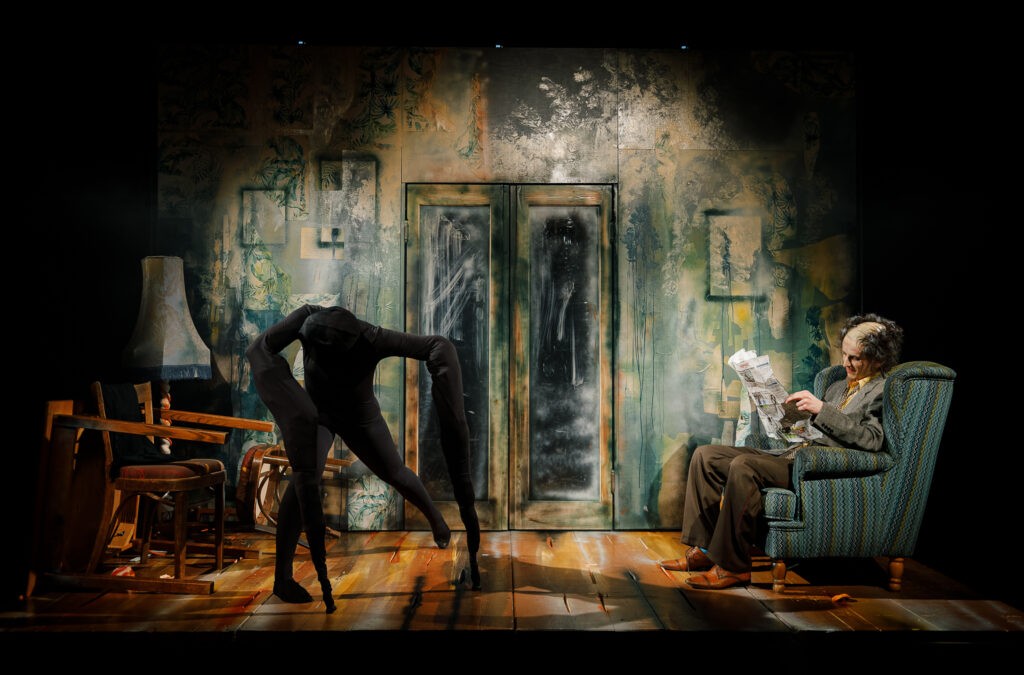
A Nagyvárad Táncegyüttes két vendégjátékot hoz Sepsiszentgyörgyre. Március 28-án A Schmürz c. fizikai színházi előadást mutatják be a Háromszék Táncstúdióban, 29-én pedig az Istenes című táncszínházi produkciót játsszák a Tamási Áron Színház nagytermében, melynek rendezője Novák Péter.

A Schmürz
Boris Vian Birodalomépítők, avagy A Schmürz című drámája alapján
Fizikai színházi őrület
Mindannyiunkban ott lapul egy alteregó, aki megszemélyesíti elnyomott vágyainkat, tetteinket, amelyekre nem vagyunk büszkék, de elfojtott lelkiismeretünket is. Ez a valami mindig ott van velünk, még azelőtt is, hogy mi megélnénk, átélnénk egy-egy pillanatot. Ez a valami – vagy inkább valaki – ő, a Schmürz.
Adott egy hétköznapi család. Menekülnek. Átlagemberek, kispolgárok, akik folyamatosan elmennek egymás mellett, mintha saját életükkel párhuzamosan léteznének. Félve menekülnek egy bizonyos hang elől, miközben a Schmürz mindig ott van velük. Ő nem menekül, csak van, létezik egy térben a családdal, és minden fájdalmat, terrort, megaláztatást kibír. A család menekülési kísérletei szoros összefüggésben vannak a Schmürz jelenlétével.
Az előadás egy eszeveszett hajsza, melyben szereplőink a túlélés reményében egy jobb élet felé rohannak.
Boris Vian drámáját feldolgozva, a fizikai színház eszközeivel élve, a társulat egy olyan kiüresedett világrend felmutatására törekszik, mely a testi fájdalmak és kínok megélésével kíván egyfajta megtisztulás-élményt nyújtani a rituálé résztvevőinek.


Rendező - koreográfus: Györfi Csaba
Zeneszerző: Boros Csaba
Díszlettervező: Cristina Breteanu
Jelmeztervező: Cristina Breteanu
Dramaturg: Czvikker Katalin
Táncosok:
Apa: Barabás Hunor
Anya: Kerekes Dalma
Kislány: Barkóczi Réka
Szobalány: Krupár Luca
Schmürz: Törteli Nadin
Az előadás időpontja és helyszíne: március 28., csütörtök, 19:00 óra, Háromszék Táncstúdió

Istenes
Táncszínházi előadás
A Kárpát-medence paraszti kultúrái – a maguk módján – szüntelen esztétikai válaszokat kerestek az őket egyéni vagy közösségi szinten foglalkoztató nagy kérdésekre. Gyakran drámaian vagy komikusan, máskor hittel telítve vagy jóleső fatalizmussal, valóságos vagy szürreális képekben fogalmaztak veszteségről, sorsszerűségről, szerelemről, halálról egyaránt.
Ebből az autentikus tudástárból merít az előadás, amely egy fordított élettörténet dramaturgiáját követve, a temetéstől a születésig, a koporsótól a bölcsőig kíséri végig a lét állomásait. Miként viszonyulunk az elmúláshoz és az öregkorhoz? Mennyire tesz boldoggá a megállapodottság vagy milyenné a magány? Örök érvényűek-e a barátságról, szerelemről alkotott fogalmaink, boldog-e a gyerekkor, s megpróbáltatás-e a születés? Népművészetünk erdélyi dialektusai kivételesen „beszédesek” az emberi kapcsolatok terén, megrendítően jelenítik meg a közösségi, családi, férfi és női viszonyok relációit.
Több generáció számos koreográfusának munkái bizonyították, hogy az autentikus kifejezésmód alkalmas a sokrétű, szofisztikált tartalmak színpadi megjelenítésére. – Ezt a szakmai örökséget kívánjuk követni magunk is! Ugyanakkor, igazodva a társulat adottságaihoz, az előadás a kortárs műfajok formanyelvéből is merít, ekképpen folytatva az idén 20 éves Nagyvárad Táncegyüttes szellemi hagyományait.


Rendező: Novák Péter
Zeneszerző: Kiss Ferenc
Díszlettervező: Cristina Breteanu
Jelmeztervező: Cristina Breteanu
Dramaturg: Czvikker Katalin
Choreographers: Farkas Tamás, Törteli Nadin
Zenészek: Dallos Levente, Kiss Dóra m.v.
Táncosok:
Barabás Hunor
Barkóczi Réka
Benedek Janka m.v. / Herman Bori m.v.
Brugós Sándor-Csaba
Forgács-Popp Jácint
Forgács Zsombor m.v.
Imre Béla
Kádár Orsolya
Kerekes Dalma-Gabriella
Krupár Luca
Nagy-Csomor Márton
Nagy Dominika
Rácz Lajos-Levente
Törteli Nadin
Az előadás időpontja és helyszíne: március 29., péntek, 19:00 óra, Tamási Áron Színház nagyterme
Az előadásokra jegyek a Központi Jegyirodában kaphatóak. A jegyiroda hétfőn, kedden és szerdán 8:00–16:00 óra között, csütörtökön 17:00, pénteken 15:00 óráig tart nyitva.
We are preparing for the first month of spring with a rich and varied programme. Our folklore show "We will live free", in memory of Petőfi, will be in the spotlight, our dance theatre production ECCE HOMO will be performed again, the Udvarhely Folk Dance Ensemble and the Oradea Dance Ensemble will be coming with guest performances, and at the end of the month our orchestra will give organised instrumental demonstrations for students.
Between 7 and 10 March, we will stage the folklore show "We will live free", directed by Ivácson László in Sfântu Gheorghe, Aita Mare, Estelnic and Suseni, which presents Petőfi's relationship with the people of Szeklerland, the mood of the years 1848-1949, the enthusiasm and compassion that arose in the wake of current events.
In the middle of the month, we will be on tour in Arad, Timisoara and Târgu Mures with a performance in memory of Petőfi. In Arad and Timisoara, our company will be a featured performer at the commemorative celebrations of 15 March.
More about the performance: We will live free
In the second half of the month, we will be hosting guest performances of the new dance theatre production ECCE HOMO: on 21 March in Odorheiu Secuiesc and on 22 March in Miercurea Nirajului. In this production, choreographer Tamás Farkas from Békéscsaba and actor-director Ernő Tapasztó from Arad will present a unique interpretation of ten emblematic paintings by Mihály Munkácsy. Through the works of the painter genius, the artists aim to convey current, 21st century contemporary ideas, such as child labour, the exploitation of children, human frailty, love, mockery, desire, the characteristics of human nature burdened with perpetual sin.
More about the performance: ECCE HOMO
On 25 and 26 March our orchestra will also give three instrumental demonstrations for students. This time, children from Brasov, Covasna and Zabola will have the opportunity to get to know different instruments.
During March, two professional dance companies will be our guests in Sf. Gheorghe. On 11 March, the Udvarhely Folk Dance Ensemble will perform a fairy tale play. The children's show "Világszép Nádszálkisasszony", directed by László Ivácson, will be performed in two organised performances at the Háromszék Dance Studio.
The Oradea Dance Ensemble will bring two guest performances at the end of the month. On 28 March, the physical theatre production "The Schmürz" will be presented at the Háromszék Dance Studio, and on 29 March, the dance theatre production "Istenes" will be performed in the main hall of the Tamási Áron Theatre, directed by Péter Novák.
The Folk Dance House will be organised on Friday, 1st of March, in the lobby of the Tamási Áron Theatre, starting from 8 pm.
Kádár Elemér néptáncpedagógus, táncművész, koreográfus, szakíró véleményezte az ECCE HOMO c. új táncszínházi produkciónkat.
Ecce Homo
Háromszék Táncegyüttes, Sepsiszentgyörgy 2024.01.30. (A bemutató utáni, második előadás)
„Az ECCE HOMO című táncszínházi produkció Munkácsy Mihály festményeit
kívánja egyedi módon feldolgozni. Az előadás egyrészt felhasználja a festőgéniusz
életútjának egy-egy karakteres elemét, másrészt 21. századi, kortárs gondolattal társítja
a képzőművészeti alkotások jelentéstartalmát, mondanivalóját, erős drámaiságát. A
műsor egésze az Íme az ember, szinte filozófiai gondolat mentén halad, boncolgatva az
emberi gyarlóságot, szeretetet, gúnyt, vágyat, az áteredő bűnnel terhelt emberi természet
sajátosságait. Az alkotók egy folyamatosan mozgó, állandóan változó projekció
használatával alakítják a teret Munkácsy Mihály festményeinek sajátos helyszínévé.” –
ígéri a színlap.
És még mielőtt rátérnék, hogy mit is láttam, szögezzük le: itt és most ugyan nem
született teljesen új műfaj, de szinte… Élt egyszer ugyanis egy orosz zeneszerző, aki az
orosz magasművészet fénykorában komponált már képzőművészeti alkotások hatása
alatt nagyléptékű zeneművet (mely többrendbéli átdolgozások után az eredeti mű
keletkezése után közel ötven évvel lett csak híres és népszerű, s azóta több kortársbalett-adaptációt is megért), de kortársai nem értették és nem fogadták valami jól… És azóta
sem igazán jellemző, hogy képzőművészeti alkotások képezzék zeneművek, vagy
táncjátékok alapját, holott ebben a tárgykörben igazán komoly lehetőségek lapulnak.
Irodalmi-, dráma- és zeneműveket relatíve gyakran láttunk táncjáték formában színpadra
alkalmazva, mi több, ez az egyik leginkább jellemző műforma színpadi táncos társulataink
repertoárjában, de a festett-faragott kép „megmozdítása” valahogy más, talán nem is
lehetséges, gondolhatták eddig sokan…
Mindannyiunk szerencséjére ezt az elvet nem ismerte Farkas Tamás, és mert nem tudta,
hogy ez nehéz, azt meg pláne nem, hogy lehetetlen, hát nekiállt és megcsinálta! Tény,
hogy helyenként kicsit keresik még az alkotók a jó megoldásokat, s valószínűleg
alakítanak még ezen az előadáson is itt-ott a közeljövőben, de vitathatatlan, hogy egy
bűvösnek vélt határvonal sikeres átlépése, az úttörés immár megtörtént (nem először a
határokat feszegető és formákat bontogató Háromszék Táncegyüttes történetében,
amúgy!).
És most már hadd beszéljek arról, amit láttam. Először is a Munkácsy-kiállítás képei:
És egy ráadás: Önarckép (megjegyzéssel a későbbiekben)
Pompás összeállítás, minden egyes eleme megindokolható, s a képek „megmozgatása” is esetenként egészen bravúros. Vannak azonban képek, melyek bizonyos paramétereik miatt számomra mégis kilógnak a kiállításból, bár önmagukban azért pozitívan értékelhetők. Ezek főleg a zenei és kosztümös témák, melyeknek pl. a humora és míves kivitele amúgy elvitathatatlan, és kiváló karakteralakításokat van szerencsénk látni! És vannak, amelyek bizonyos részleteikben számomra túlságosan körülményes- hosszadalmasak, hogy aztán váratlanul lecsapják a poént (Ásító inas, Siralomház). Ez utóbbiban pedig számos olyan koreográfiai huszárcsel felvillan, amely már abba az irányba mutat, ami aztán később kétszer is „Na ez az!”- érzést váltott ki belőlem. Eleinte azt reméltem, hogy miként pl. a Felhőatlasz c. filmben, ez esetben is összeáll a végén a sok kis kép egy kerek egésszé, de aztán egyre inkább eluralkodott rajtam az érzés, hogy elveszítettem a fonalat…


Pedig, amint már mondtam, szép számmal vannak az előadásban igazán szép koreográfusi megoldások, különösen azok, amelyekben nem ismerem fel pl. a szatmári verbunk elemeit, hanem a néptánc-alapú színpadi nyelvezet teljesen a téma szolgálatában ölt eredeti formát. A köpülő és a rőzsehordó nők jeleneteit igazán nagyon szépen foglalja keretbe Molnár Anna balladája, ez az egyik legszebb része az előadásnak.

A ballada jóvoltából az alkotók és nem vitás, hogy a táncosok is ihletetten továbbgondolták a híres képeket és bátran fűzték őket össze olyan további „képekkel”, melyeket nem Munkácsy mester festett, hanem a népköltészetünkben maradtak ránk, de amelyeknek itt szerepük és értelmük lett. Ez a kreatív bátorság kell az ilyen előadáshoz!


A másik ilyen nagyon erős és kellőképpen míves jelenetsor a Krisztus-trilógia. Ez így akár egy önálló, külön előadás is lehetne. Zseniális, ahogy a három kép közötti teret megtölti az egyes kiemelkedő karakterek ábrázolása, mint pl Júdás, Barabás, Mária Magdolna… És nyilván Jézus és Pilátus alakjai is, bár itt már megint kibújik a zsákból pár túlságosan könnyen jött néptáncos megoldás: a helytartó maruntelu-ja, melyről minden néptánchoz értő néző azonnal Méhkerékre gondol, és Jézus ugróstánca sem feltétlenül szerencsés, a korábbi méltóságteljességéhez nem illik, hogy egy ágyékkötőben, töviskoronásan, összekötözött kezekkel ugrándozik.


A záróképben a kereszt nagyon pici, bár annak méltóságteljes összeácsolása szép párt alkot a kezdőképben kétségbeesetten ágyat építő inas kapkodó munkálkodásával… Ahogyan azonban a látványos-hatásos előkészületek után a táncos fölkucorodik rá, emiatt az apróság miatt nem annyira drámai, mint amennyire az lehetne, s amilyeneket korábban más társulatok megfeszített Krisztus-ábrázolásaiban már láttunk.


És akkor a megjegyzés a Munkácsy-portréhoz, amit fentebb ígértem. Egy technikai baki következtében ez a kép az előadás fináléjában nem jelent meg a kivetítőn. Hogy ott kellett volna lennie, azt csak a bemutatón készült fotók és elmondás alapján tudtam meg.
Nekem az egyébként erős záróképből nem hiányzott, hogy hiányzott. Talán érdemes eltekinteni tőle a jövőben is, vagy valahol egészen más helyen, más kontextusban emelni be.
A díszletek, kellékek, esetenként a jelmezek is elszomorítóan egyfunkciósak (különösen az óriásbillentyűzet), a kivetített képekkel való játék néha jól működik, de nem mindig. A kivetített és a táncosok által megjelenített képek egyidejű alkalmazása, mutatása kicsit együgyű, valamelyik felesleges. Ezt az animáció-alkalmazást, melyben nem vitás, hatalmas lehetőségek vannak, érdemes lenne a közeljövőben kicsit újra- vagy továbbgondolni. Az eredeti képek reprodukcióinak megmutatása szükséges, de nem biztos, hogy pont akkor, amikor a színen a táncosok ugyanazt pózolják. A képek/jelenetek/témák közötti határokat több alkalommal is jobban el lehetne kenni, valahogy úgy, mint a balladás nők és a trilógia esetében, ahol sok jó játék és mellékszál is bejön, látszik, hogy az alkotók ezeken dolgoztak fejben a legtöbbet. Abban komoly lehetőségek vannak még, hogy a jelenet tárgyát képező teljes művek egyes részleteit, egyes szereplőit és a táncosokat együtt hozza helyzetbe az alkotó, de szerencsésebb lenne, ha nem egy kivetített, meg egy élőszereplős képet látnánk egyszerre, hanem tényleg „csak” egyet, melynek egy része élőalakos, másik része animáció.
Van (?) egy mellékszál az egész előadásban, amelyben a száznyolcvan éve született festőt igyekeznek az alkotók valahogy felvillantani, de sajnos ez inkább csak egy szándék maradt, mintsem egy jól végigvezetett vezérfonal, mit a nézők felismernek és követni tudnak.
Nagyon jó a zene! Kár, hogy egyetlen zongoraszólót leszámítva a teljes hanganyag felvételről megy, bár ennek oka nyilvánvaló és amúgy felettébb dicséretes, hogy ekkora odafigyeléssel és igényes munkával ezeket a felvételeket létrehozták. Lehet, sőt elég valószínű, hogy Fazakas Levente még nem fog ezzel a művével Muszorgszkij mester mellé ülni ama dobogóra, de megvan az esélye, hogy ha így halad, idővel majd akár azt is megtehesse! Ami egészen biztos: megnézem még a napokban ezt az előadást újra.
Creators:
Zeneszerző: Fazakas Levente
Jelmez: Cristina Breteanu
Díszlet: Szőke Zsuzsi
Látvány, projekció: Izsák Előd
Kellékmester: Zayzon Ádám
Művészettörténeti tanácsadó: Gyarmati Gabriella
Dramaturg: Tapasztó Ionela-Alexandra
Táncmester, koreográfus asszisztens: Farkas Ágnes
Koreográfus: Farkas Tamás
Rendező: Farkas Tamás - Tapasztó Ernő
A hangfelvételen közreműködnek:
Tiberius String Quartet:
Molnár Tibor - I. hegedű
Lokodi Károly - II. hegedű
Molnár József - mélyhegedű
Zágoni Előd - gordonka
Dresch Mihály - tárogató, fuhun
Rázga Áron/Vida Mónika Ruth- zongora
Lőfi Gellért - ének
Gáspár Csaba - ének
Kerezsi Csanád - ének
Heveder Band:
Fazakas Levente - hegedű, ének
Fazakas Albert - cimbalom, brácsa
Szilágyi László - brácsa, ütőgardony
Bajna György - nagybőgő
Both Hajnal – fuvola
Vitályos Dorottya - klarinét
Kertész Huba – gitár
Kertész János - zongora
Az előadásban élőben zongorázik Ádám Julcsi.
Stúdió, utómunka: Kertész János, Kertész Huba
Plakát: Hodgyai István
Tánckar: Abonyi Rebeka, Ádám Júlia, Balla Gergely, Both Eszter, Gere Csaba, Gere Gabriella, Drimba Máté, Fazakas Mónika, Ferencz Péter, Fülöp Zoltán-József, Kiss Adorján, Kocsis Lilla-Tünde, Lukács Réka, Márton Csaba, Márton Edina-Emőke, Melles Endre, Pável Hunor-Mihály, Portik-Cseres Norbert, Vass Tünde, Vitályos Dorottya
Az előadáson felhasznált műtárgyfotók a Szépművészeti Múzeum - Magyar Nemzeti Galéria, a debreceni Déri Múzeum, valamint Pákh Imre magángyűjtő tulajdonát képezik, és jogi védelem alatt állnak.
Fotó: Ádám Gyula, Kátai Jocó
The youngest professional dance company in Transylvania, the Bekecs Dance Theatre, dazzles audiences with its folk dance and dance theatre productions, as well as occasional prose-based performances. "Thrown between two worlds, to which one should I give my right hand, I don't know" - this is the Madách quote chosen by the creators as the motto of the performance "Who did you love, Madách?", which will be presented on 22 February at the Háromszék Dance Studio.
Imre Madách, the world-famous pride of Hungarian literature, lived in the embrace of the women who defined his life and works, Anna Majtényi and Erzsébet Fráter. While the fundamentally and minutely different worlds of mother-in-law and daughter-in-law are at war with each other, the gentle writer who lives for creation is consumed between them. Their battles are fought for the sole possession of the writer's love. Both women want to come clean before the Lord, to take stock of their lives, to seek reassurance. In our performance, our characters reveal the decisive events of their lives, the driving forces behind their actions, their innermost thoughts and feelings, and evoke the now dead Imre Madách. An eternal, almost everyday theme: the antagonism and enmity between mother-in-law and daughter-in-law, and the helpless pain of the man who loves them both, grinding between them. This is how Imre Madách lived and created The Tragedy of Man.
Actors:
Majthényi Anna - Kilyén Ilka
Fráter Erzsébet - Ritziu Ilka-Krisztina
Madách Imre - Györfi Csaba
Creators:
Composer: Boros Csaba
Set - costume designer: Cristina Breteanu
Director - coreographer: Györfi Csaba


Tickets for the performance can be purchased at the Central Ticket Office.
Office hours: Monday, Tuesday and Wednesday from 8 a.m. to 4 p.m., Thursday from 8 a.m. to 5 p.m., Friday from 8 a.m. to 3 p.m. and one hour before the performance. Phone number: 0267-312104.
This month we will present our new dance theatre performance ECCE HOMO in Sfântu Gheorghe and Târgu Secuiesc, Bekecs Dance Theatre will bring a guest performance, and on the 28th of February we will commemorate Petőfi with our folklore show "We will live free".
Tamás Farkas, choreographer from Békéscsaba and Ernő Tapasztó, actor-director from Arad, will present a unique interpretation of ten emblematic paintings by Mihály Munkácsy in the performance ECCE HOMO. The production will be presented on the occasion of the Munkácsy commemorative year, as the Hungarian painter was born 180 years ago, on 20 February 1844 in Munkács (Transcarpathia, Ukraine). Through Munkácsy's paintings, the director of the performance aims to convey contemporary ideas of the 21st century, such as child labour, the exploitation of children, human frailty, love, mockery, desire, the characteristics of human nature, the peculiarities of human nature, burdened with original sin.
The audience in Sfântu Gheorghe can see the performance on 3, 11 and 12 February, while in Târgu Secuiesc on 13 and 14 February.
More about the performance: ECCE HOMO
The youngest professional dance ensemble in Transylvania, the Bekecs Dance Theatre, dazzles audiences with its folk dance and dance theatre productions, as well as occasional prose-based performances. "Thrown between two worlds, to which one should I give my right hand, I don't know" - this is the Madách quote chosen by the creators as the motto of the performance "Who did you love, Madách?", which will be presented on 22 February at the Háromszék Dance Studio. The production deals with an eternal story, the opposition between mother-in-law and daughter-in-law, the enmity and the helpless pain of the man who loves both of them, who hesitates between them. This is how Imre Madách, an iconic figure of Hungarian literature, lived and created. The performance was directed by Csaba Györfi.
More about the guest performance: Guest performance by Bekecs Dance Theatre
At the end of the month we will perform again the folklore show "We will live free" directed by László Ivácson, which presents the relationship of Sándor Petőfi with the people of Szeklerland, the changes in the mood of the years 1848-1949, the enthusiasm and compassion that arose in the wake of current events.
More about the performance: We will live free
This month our orchestra will give an instrumental demonstration for students. This time the organised performances will be held at the Váradi József Primary School on 15 February.
Our February Folk Dance House will be held on Friday, 16 February, in the Tamási Áron Theatre foyer, from 9pm.
Tickets for our performances in Sfântu Gheorghe can be purchased at the Central Ticket Office.
The office is open from 8 a.m. to 4 p.m. on Mondays, Tuesdays and Wednesdays, from 8 a.m. to 5 p.m. on Thursdays, from 8 a.m. to 3 p.m. on Fridays, and one hour before the performances. Phone number: 0267-312104.
Tickets for the performance in Tg. Secuiesc can be purchased at the ticket office of the Cultural Center Vigadó every Monday, Tuesday, Wednesday and Thursday from 8.00 to 16.00, every Friday from 8.00 to 14.00 and one hour before the performance.
The Folk Dance Houses are supported by the Csoóri Sándor Fund and the Bethlen Gábor Fund.
Photo: Kátai Jocó
We start the year with an irregular dance theatre performance: choreographer Farkas Tamás from Békéscsaba, Hungary, and actor-director Tapasztó Ernő from Arad will present a unique interpretation of ten emblematic paintings by Munkácsy Mihály in the production ECCE HOMO. The premiere will take place on 29 January in Sfântu Gheorghe.
The production will be presented on the occasion of the Munkácsy commemorative year, as the Hungarian painter was born 180 years ago, on 20 February 1844 in Munkács (Transcarpathia, Ukraine). Through Munkácsy's paintings, the director of the performance aims to convey contemporary ideas of the 21st century, such as child labour, the exploitation of children, human frailty, love, mockery, desire, the characteristics of human nature, the peculiarities of human nature, burdened with original sin.
The artists use the ever-changing projected images to transform the dance floor into a specific setting for the paintings. During the performance, we can understand and feel these phenomenal genre paintings, salon paintings, the Christ trilogy, one of the pieces of which gives the title to the performance. In fact, the show as a whole is based on the philosophical idea of "Behold Man", interwoven with the powerful drama of Munkácsy's paintings.

Photo: Kátai Jocó
The composer of the performance is Levente Fazakas, whose works will be performed by renowned and well-known artists such as Tiberius String Quartet, Mihály Dresch, the Heveder band, Gellért Lőfi, Csaba Gáspár and Csanád Kerezsi. The period costumes are the work of Oradea-based costume designer Cristina Breteanu, while the scenery, projection and set design is by Előd Szőke-Izsák and Zsuzsi Szőke. Gabriella Gyarmati, art history consultant, helped the artists to choose the paintings. The choreographer is Tamás Farkas and the production is co-directed by Tamás Farkas and Ernő Tapasztó.
The production was supported by the National Cultural Fund and the Bethlen Gábor Fund. The photographs used in the production are the property of the Museum of Fine Arts - Hungarian National Gallery, the Déri Museum in Debrecen and the private collector Imre Pákh, and are protected by law.
The premiere will take place on Monday, 29 January at 19:00 at the Háromszék Dance Studio in Sfântu Gheorghe, and will be performed on 30 and 31 January as well. Tickets can be purchased at the Central Ticket Office (open on Mondays, Tuesdays and Wednesdays from 8 a.m. to 4 p.m., Thursdays from 8 a.m. to 5 p.m., Fridays from 8 a.m. to 3 p.m. and one hour before the performances). Telephone number: 0267-312104).
We will surprise our audience with a new performance in the first month of 2024. We won't forget the children either, we will organise instrumental demonstrations by our orchestra on 16-17-18 January.
Our ensemble will be creating an unusual dance theatre performance entitled ECCE HOMO, the brainchild of choreographer Tamás Farkas, to celebrate the 180th anniversary of Mihály Munkácsy's birth.
The production aims to present Munkácsy's paintings in a unique way, using on the one hand a characteristic element of the painter and on the other hand, associating the meaning, message and message of the works of art with 21st century, contemporary ideas.
Creators: Tamás Farkas, director-choreographer, Ernő Tapasztó, assistant director and dramaturg, Levente Fazakas, composer, Előd Izsák, projectionist, Zsuzsi Szőke, set designer, Cristina Breteanu, costume designer, Gabriella Gyarmati, artistic advisor.
The premiere will take place on 29 January at the Háromszék Dance Studio, but the performance will be staged twice more at the end of the month.
We will also organise our opening folk dance house, details will be announced later.
Monthly programme:
| 16 January (Tuesday) 12:00 | Instrument demonstration organised performance | Bixad |
| 17 January (Wednesday) 10:00 | Instrument demonstration organised performance | Sf. Gheorghe Mikes Kelemen Theoretical School |
| 18 January (Thursday) 10:00 | Instrument demonstration organised performance | Sf. Gheorghe Mikes Kelemen Theoretical School |
| 29 January (Monday) 19:00 | ECCE HOMO | Sf. Gheorghe Háromszék Dance Studio |
| 30 January (Tuesday) 19:00 | ECCE HOMO | Sf. Gheorghe Háromszék Dance Studio |
| 31 January (Wednesday) 19:00 | ECCE HOMO | Sf. Gheorghe Háromszék Dance Studio |
Tickets for our performances can be purchased at the Central Ticket Office.
Office hours are Monday, Tuesday and Wednesday from 8 a.m. to 4 p.m., Thursday from 8 a.m. to 5 p.m., Friday from 8 a.m. to 3 p.m. and one hour before the performance. Telephone number: 0267-312104.
Photo by Krisztina Németh
